
Welcome to Here for Vanity - sharing all things self-care, anti-aging, and beauty for navigating the glow-up after 40.
Glad you're here!
Learn more
I’m sharing my ideal perimenopause diet plan because after 40, I noticed that the same “healthy” habits I had relied on for years were not giving me the same results. And it was frustrating.
My energy was less steady and losing weight took more effort. I’m a certified personal trainer and nutrition coach, so I already understood calories, macros and body composition. None of this was new to me.
But after 40, especially after 42, my body started feeling much less predictable. Here’s what I changed to feel more in control of how I looked and felt.
Simply put: I noticed mood shifts (my energy could be great one day and flat the next), losing a few pounds was way harder, and my energy was low.
And sometimes I did not have one specific symptom I could point to. I just felt off. That was the frustrating part!
I was already doing many of the things we are told should help. I trained consistently, prioritized sleep, and experimented with supplements while reading everything I could about hormones and perimenopause. Still, I kept wondering what I was missing.
And I kept coming back to food.
Years ago, I did Whole30 twice, and I remember feeling really good during those stretches – tons of energy and focus (and weight loss too).
If you’re not familiar with Whole30, it’s a 30-day elimination program that cuts out added sugar, alcohol, grains, legumes, and dairy, along with many of the snack foods and baked goods you would normally reach for.
I do not think Whole30 was doing anything magical and I also do not think women need to eliminate entire food groups to eat well.
But, the part that stuck with me was much simpler: I had removed most of the processed food from my diet.
I was eating eggs, meat, fish, vegetables, fruit, potatoes, nuts and actual meals with enough protein to sustain me until my next meal. I clearly recall morning breakfast was eggs and chicken breast…and it kept me full for hours!
No more packaged snacks and protein bars. I stopped grabbing little things throughout the day without thinking about them.
And I felt better.
That experience came back to me when I started feeling different in my 40s and it shapes the way I coach women now.
PSA: If you are trying to figure out which habits actually make a difference after 40, The Glow Protocol walks you through nutrition, training, sleep and recovery in the order I use them myself.
Calories and macros still matter after 40. Simply put, if you’re overeating, you can still gain weight.
But I am much less casual now about what comes packaged inside those calories.
Maintaining muscle and bone becomes more important as we get older, and the hormonal changes around menopause can affect body composition and bone loss.
That changed how I think about food.
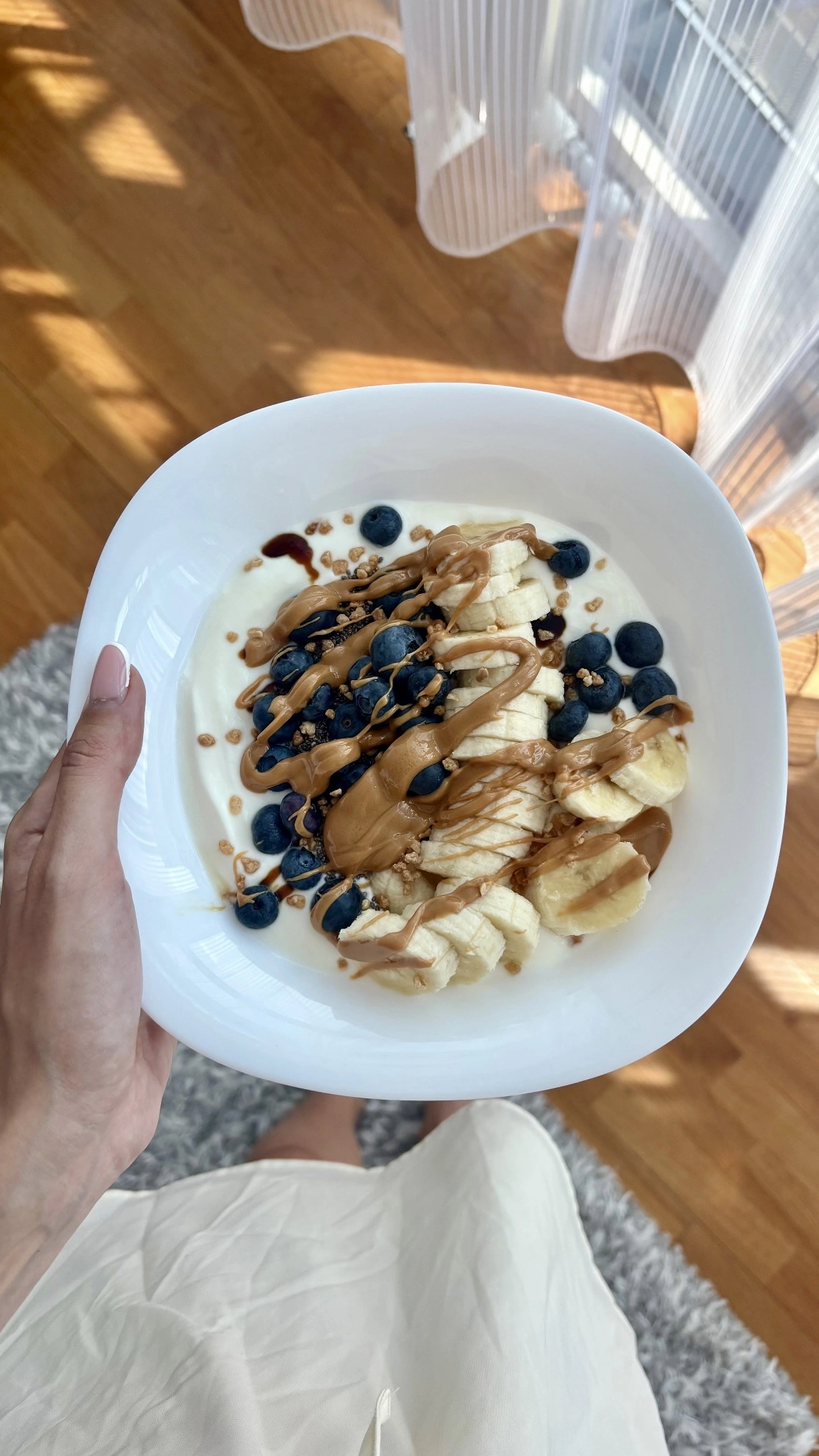
A 200-calorie package of snack food and 200 calories of Greek yogurt, berries and ground flax can both fit into the same calorie target. But they are giving my body very different things.
One gives me calories. The other gives me protein, fiber, calcium, vitamins, minerals and plant compounds.
I still track macros when I am focused on body composition. I just want those macros to come with more nutritional value now.
After 40, I want more return from the food I am already eating.
Yes, you can still look and feel good with some processed foods. Do I still eat them? Yeah – I do have a 9-year old boy in the house, after all.
But, focusing on whole foods make that much easier. Most of my regular meals come from foods that still look reasonably close to their original form.
Things like eggs, Greek yogurt, chicken, lean beef, fish, oats, rice, potatoes, beans, berries, vegetables, fruit, nuts, seeds and olive oil.
That basic pattern gives me several things I am deliberately trying to get more of now: quality protein, fiber, healthy fats and micronutrients.
There is also a good evidence-based model for this approach. Mediterranean-style diets emphasize vegetables, fruits, legumes, whole grains, nuts, olive oil, fish and other minimally processed foods. A 2024 study of the Mediterranean diet in menopausal women found beneficial effects across several health measures, although the number of intervention studies was still relatively small.
I have written more about the Mediterranean diet here.
I do not eat according to a rigid Mediterranean meal plan. I use the same underlying idea: build most meals from nutrient-dense foods and let those foods do more than simply fill a calorie budget.
Protein is one of the first things I look at when coaching a woman who wants to get leaner, stronger or change the way her body works.
It is also the first thing I look at in my own diet.
I weigh around 117 pounds, and I feel pretty good when I consistently get at least 100 grams of protein per day. During a focused body composition phase, I may work closer to roughly one gram per pound of body weight because it is an easy target to track and tends to keep meals satisfying.
That does not mean every woman in perimenopause needs one gram per pound.
Research looking at resistance training has found that protein intakes around 1.6 grams per kilogram of body weight per day appear sufficient to maximize muscle gains for many healthy adults, with little additional benefit seen above that level in the pooled data.
For a 117-pound woman, 1.6 g/kg works out to roughly 85 grams per day.
I personally prefer a little more.
My first choice is also food, not a collection of protein products. I try to regularly build meals around:
Protein powder is convenient when needed. It does not need to become breakfast, lunch and a personality.
I stay much more in control of my eating when I eat three actual meals instead of grazing all day.
For me, a useful target looks something like 30 to 40 grams of protein per meal.
That gets me very close to my daily target before random snacks ever enter the picture.
And random snacks really add up.
I know exactly what happens when I have not slept well, I feel a little off, or my food environment gets loose. A handful of something here, two bites there, a little of whatever my nine-year-old and his friends are eating after school.
It is very easy to accumulate 400 or 500 calories without ever feeling like you ate a meal.
That does not mean your house needs to become a monastery because you have children.
One thing that actually works in my house is putting out a big platter of cut fruit and vegetables after school. The kids eat it because it is there. I eat it because it is there too.
Your environment counts.
Protein gets most of the attention in fitness circles but fiber deserves much more.
A useful reference point for women ages 31 to 50 is about 25 grams of fiber per day.
I get mine primarily from:
Fiber gives the bacteria living in your digestive tract something to work with. Different types of dietary fiber can be fermented by gut microbes, producing compounds that interact with the intestinal environment and the rest of the body.
That has made fiber much more interesting to me than it was when I was younger and mainly thinking about calories and protein.
You will sometimes hear claims that fiber “removes excess estrogen” or “detoxes hormones.”
I would not reduce the science to that.
The gut microbiome does appear to participate in estrogen metabolism, and researchers are actively studying this relationship during the menopause transition. But the science is still developing, and researchers have not identified one ideal microbiome or dietary formula for women in perimenopause.
So I am not putting flaxseed in my yogurt because I think it is performing a hormone cleanse.
I eat it because it adds fiber and nutrients to a meal I was already going to eat.
This is another thing I barely thought about when I was younger.
Now I care much more about eating a variety of plants instead of checking the “I ate vegetables today” box. I rotate berries, greens, peppers, carrots, tomatoes, beans, lentils, oats, flax, chia, nuts and seeds. I also eat fermented foods like Greek yogurt.
Different types of fiber feed different gut microbes, and researchers are also studying the relationship between the gut microbiome and estrogen during the menopause transition.
I do not need to turn that into another wellness project.
For me, it means eating more plants, getting enough fiber and mixing up what I eat throughout the week.
I spent years thinking primarily in terms of calories, protein, carbohydrates and fat.
Now I pay much more attention to the vitamins and minerals underneath those numbers. I truly feel different when I’m supporting my body with antioxidant-rich whole foods.
Your cells depend on micronutrients to carry out basic processes. Magnesium, for example, is involved in energy production, protein synthesis, blood glucose regulation, muscle function and nerve function.
So I try to eat foods that bring more nutrition with them.
This is also where my anti-aging superfoods list comes in handy. Berries, greens, fatty fish, colorful vegetables, nuts and seeds are useful for much bigger reasons than the word “anti-aging.” They provide the nutrients your body needs to function and recover.
I pay particular attention to nutrients that support muscle and bone as I get older.
Calcium and vitamin D become harder to ignore as we approach menopause because declining estrogen accelerates bone loss. Greek yogurt earns its place in my refrigerator because it gives me protein and calcium in the same food.
Other options include dairy, calcium-set tofu, fortified plant milks, canned fish with bones and certain leafy greens.
For me, eating a varied whole-food diet covers a lot of nutritional ground without much thought.
I do not want a perimenopause diet that requires seventeen ingredients at every meal. I want something I can repeat.
My basic structure is simple:
Start with a substantial protein source, add plants, include a fiber-rich carbohydrate, then add a source of healthy fat when the meal needs it.
A normal day might look like this:
| Meal | Example |
|---|---|
| Breakfast | Eggs and egg whites with oatmeal, berries and ground flaxseed |
| Lunch | Leftover chicken bowl with quinoa or rice, greens, peppers, cucumber and olive oil |
| Dinner | Salmon, lean beef or tofu with potatoes, broccoli and a large salad |
| Snack | Greek yogurt and berries, fruit, veggies/hummus or another simple whole-food option |
| Dessert | Medjool date with a little peanut butter and dark chocolate |
The portions change depending on my training and body-composition goals, but I keep the structure more or less the same.
Real meals also work much better for me than grazing all day.
I know how easy it is for “a handful of this” and “two bites of that” to become hundreds of calories without ever feeling like I actually ate anything.
My food environment helps too. I regularly put cut fruit and vegetables out after school for my son and his friends.
They eat it because it is sitting there and so do I.
My diet didn’t really change because of my birthday but once you’re past 40, you start noticing the shifts which makes you take a closer look at your habits.
I pay attention to protein because I want to protect muscle and continue getting stronger.
I also focus on fiber and plant variety because digestion and the gut microbiome need more love than I gave them in my 20s and 30s.
I pay attention to calcium, vitamin D and resistance training because bone health becomes increasingly important through the menopause transition.
And I care more about micronutrients because I want my calories doing more work. This is probably the biggest shift for me.
I used to think mostly about how much I was eating. Now I care just as much about what I am getting from what I eat.
There is still room for dessert, dinners out and foods that serve no higher nutritional purpose whatsoever.
But those foods sit on top of a strong foundation instead of replacing it.
That is how I want to approach the rest of my 40s too.
I am not trying to become smaller at all costs. I am just trying to become stronger, leaner, more energetic and more capable.
There is no single official perimenopause diet. A strong starting point is a whole-food pattern built around adequate protein, vegetables, fruit, legumes, whole grains, healthy fats and minimally processed foods. Mediterranean-style eating is one evidence-supported model.
I prioritize a quality protein source at each meal, several servings of colorful plants, fiber-rich carbohydrates and foods containing healthy fats. I also rotate foods like Greek yogurt, berries, flaxseed, pumpkin seeds, beans, leafy greens, eggs, fish and whole grains.
You do not need every “superfood” every day.
Variety over the week matters more.
There is no universal perimenopause-specific protein number. Research in adults performing resistance training suggests around 1.6 g/kg/day is a useful evidence-based reference point for supporting muscle gains.
I personally eat about 100 grams or more most days at 117 pounds and may go higher during a specific body composition phase.
I do not.
I prefer minimally processed carbohydrate sources like oats, potatoes, fruit, beans, lentils, rice and whole grains. They provide fiber, potassium, magnesium and other nutrients, and carbohydrates help support training.
The amount can be adjusted to your energy needs and goals.
Brazil nuts are extremely high in selenium, a mineral involved in thyroid hormone metabolism. One or two can provide plenty. Eating large amounts regularly is unnecessary and can result in excessive selenium intake.
I would be skeptical of anyone promising that a specific food plan will “balance” all of your hormones.
Nutrition can support overall health, body composition, cardiovascular health, bone health and adequate nutrient intake. It does not stop the normal hormonal changes of perimenopause.
And if symptoms are significantly affecting your quality of life, nutrition should not become a reason to avoid appropriate medical treatment.
I didn’t drastically change me diet because I turned 40. I just started paying much closer attention to what was actually making me feel good.
I still care about calories and macros. But now I care just as much about getting enough protein, fiber, plants and nutrient-dense foods to support how I want to train, look and feel.
I am not trying to eat perfectly. I want to stay strong, lean, energetic and capable as I get older, and this is the way of eating that helps me do that.
If you want more structure around nutrition, training, sleep and recovery after 40, The Glow Protocol walks you through the habits I focus on and how I put them together.


