
Welcome to Here for Vanity - sharing all things self-care, anti-aging, and beauty for navigating the glow-up after 40.
Glad you're here!

Learn more
After 40, we’re all just trying to feel better and optimize our health. These eight anti-aging exercises and training methods help women over 40 preserve muscle, bone density, cardiovascular fitness, mobility and balance.
As a certified personal trainer in my 40s, these are the forms of movement I prioritize in my own training and recommend for building a body that stays strong and capable with age.
I scrolled through Instagram for 90 seconds this morning and absorbed the following: one woman had already hit 180 grams of protein before lunch. Another was deep into her 75 Hard, cold plunge, sauna, gut-healing fiber smoothie routine before 6 a.m. A third was deadlifting 225 pounds in a matching set.
I’m in my 40s, and I hadn’t had coffee yet.
Strength train. Eat more protein. Get your fiber. Walk 10,000 steps. Lift heavy, but not too heavy. Take creatine. Sauna twice a week. The list never ends, and the algorithm knows it!
Most of it is trendy, but one of them isn’t: strength training.
Strength training is the foundation of staying youthful, and there’s studies to back that up.
After 30, sarcopenia (age-related muscle loss) starts. We lose muscle with age, and for women, that process speeds up as estrogen declines.
By 60, that loss adds up to the kind of weakness that you feel.
The good news is the body still responds to the right inputs – fast. A 2023 study in Aging Cell found that four weeks of HIIT reduced biological age by 3.59 years in adults ages 40 to 65.
Strength training also helps slow bone loss. Mobility work helps you keep the balance, range of motion, and stability that tend to disappear as we age.
Below are seven science-backed exercises that support healthier aging, why they matter for women 40+, and how to fit them into your routine, realistically.
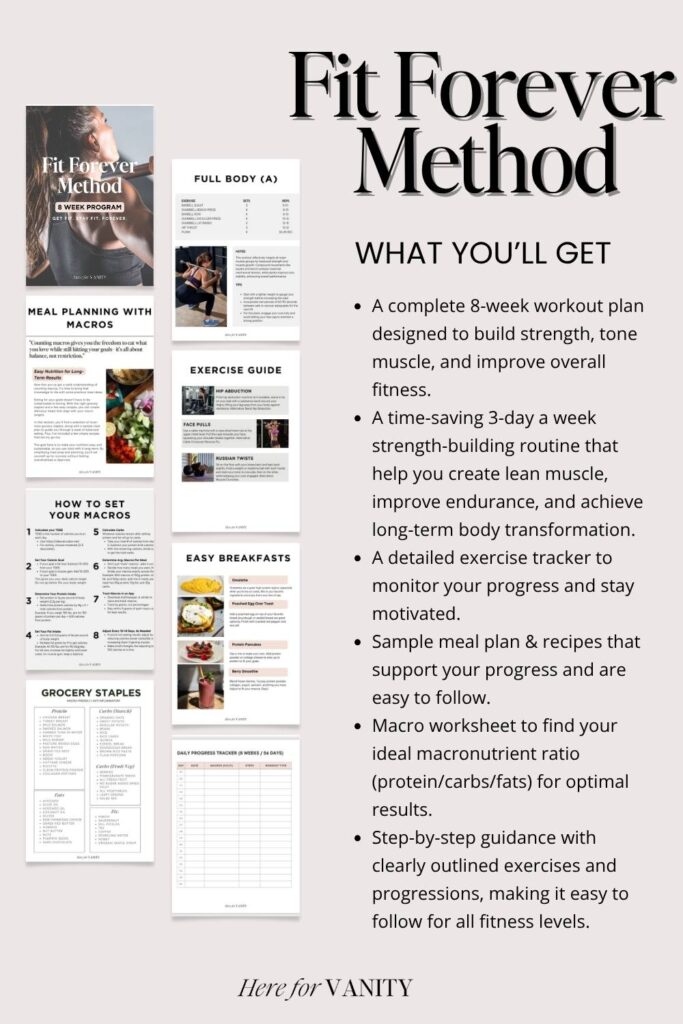
Want a strength routine built around exactly this idea, three days a week, no guessing? Fit Forever is the program I built for the foundation phase.
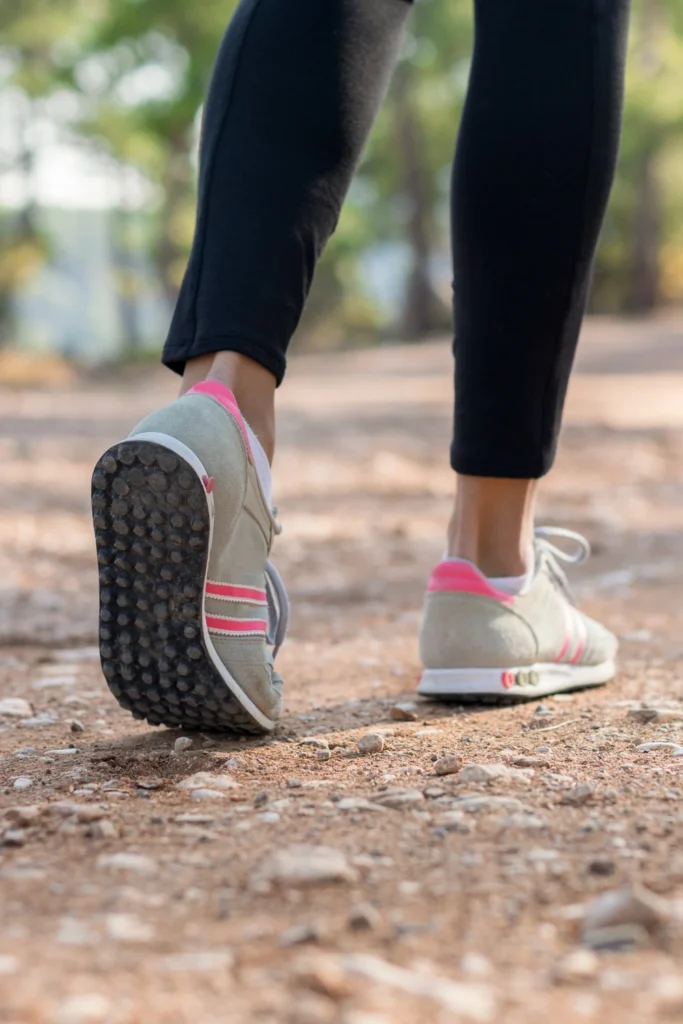
Walking is the most underrated longevity tool we have, and it’s free!!
In 2023 I challenged myself to hit 12k steps a day, every day. I’d probably been getting 6 to 8k before. I have never seen my body change that dramatically from one habit.
A 2025 review in The Lancet Public Health found that 7,000 steps a day cuts your risk across major health issues by up to 47%, and 10,000 adds another 10 percent on top of that.
Skip it and you get the opposite. Your legs weaken, blood sugar isn’t as stable, and your skin shows it, because circulation is what delivers nutrients to your face.
How to fit it in: I use a walking pad under my desk and swear by it. But, you don’t need one. Park further out, walk on calls, loop the block before dinner. Errands count too! The point is to stop sitting for nine straight hours after one workout.
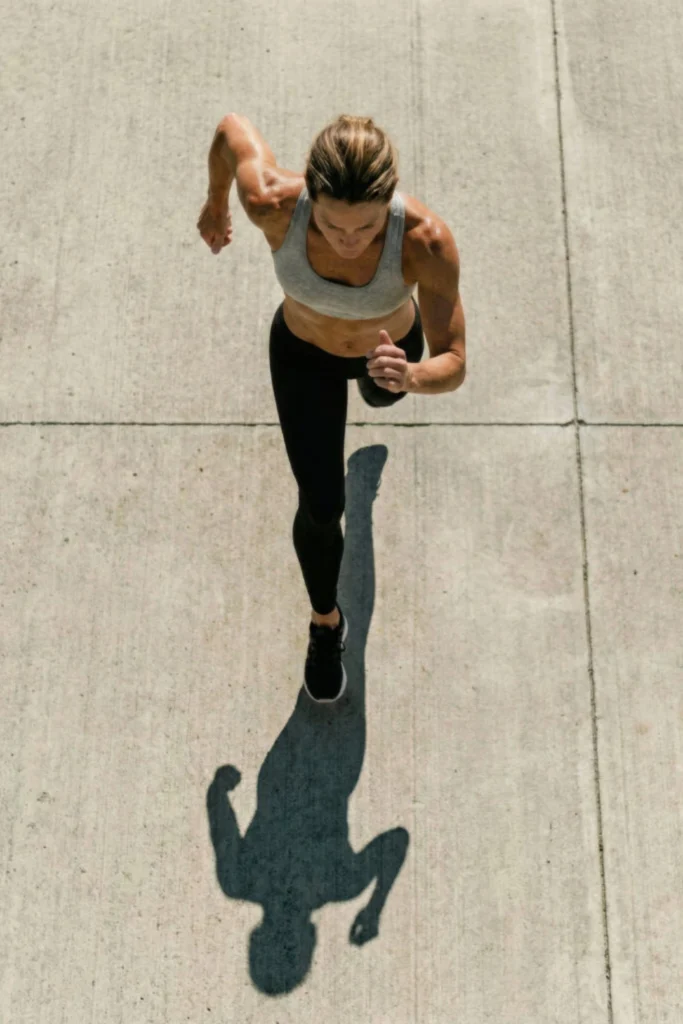
HIIT is where most women over 40 either go too hard or skip it entirely. And if you’re struggling with perimenopause brain fog (raises hand), definitely incorporate HIIT sessions.
Studies show HIIT improves how efficiently your body uses oxygen (VO2 max), how strong your muscles are, and how sharp your brain stays, all by double-digit percentages in adults 60 to 85.
VO2 max is basically your cardiovascular engine, and it’s one of the strongest predictors of how long you’ll live.
After 40 consideration: HIIT raises cortisol. After 40, with hormonal shifts already pulling on your stress system, more is not better. One or two sessions per week is plenty. Pair it with strength and Zone 2, not on top of seven other intense workouts.
How to fit it in: Try a 4×4 protocol once a week. Four minutes hard, four minutes easy, repeated four times. On a bike, a treadmill, or hills. Twenty minutes total.
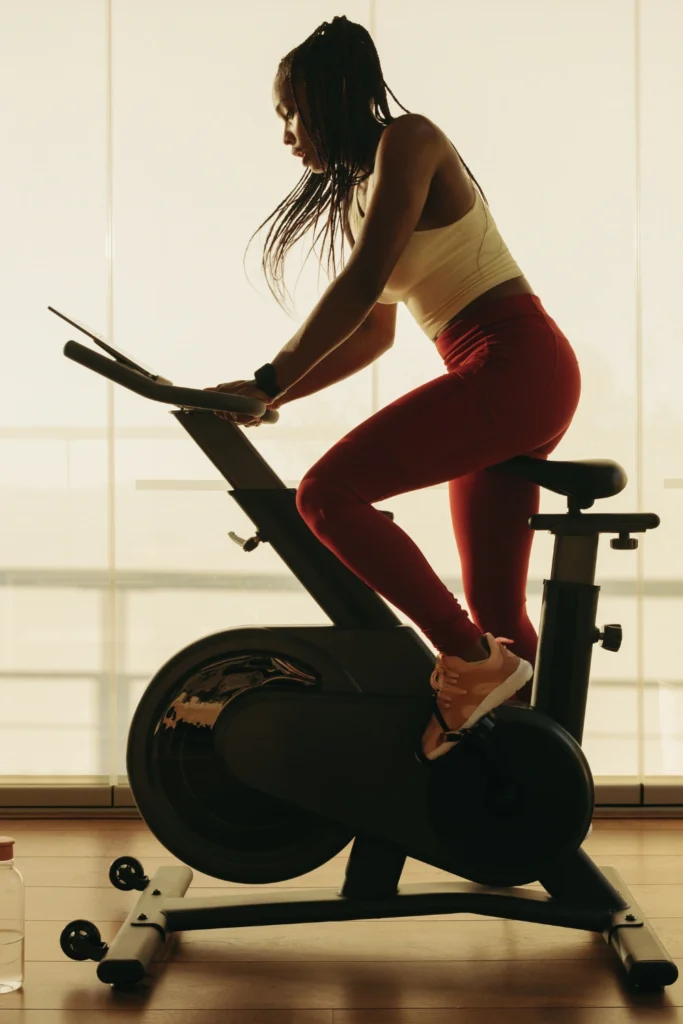
I’m the biggest advocate for lifting heavy, but cardio (for heart health and mental health) matters just as much.
What’s “zone 2”?
Zone 2 is the pace where you can hold a conversation but feel like you’re working. Slightly breathy, but you could keep going for an hour. Brisk walking uphill, an easy bike ride, a slow jog.
Technically, it’s 220-(age) x 70% if you want to get precise.
This is the intensity that builds new mitochondria, which are basically the tiny power plants inside every cell of your body. More mitochondria = more energy, and your body gets better at burning fat for fuel instead of relying on sugar.
Longevity doctor, Peter Attia, made Zone 2 one of the four pillars of his own training and recommends about 3 hours a week, usually split into four 45-minute sessions.
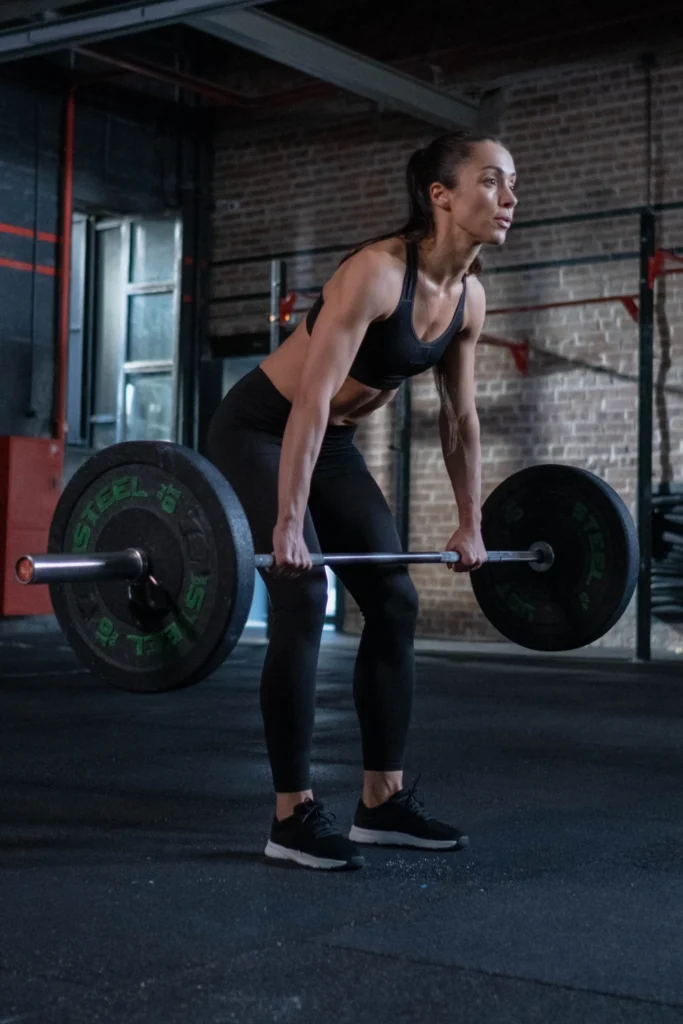
If you do one strength movement after 40, make it some version of the hip hinge.
The 2018 LIFTMOR trial had postmenopausal women deadlift heavy, and their spine and hip bone density improved significantly. A separate study found that for women in early menopause, squats and deadlifts alone outperformed hormone therapy for preserving spine bone density.
Read that again. Lifting beat hormones for bone.
Skip it and bone loss speeds up through perimenopause and the decade after. Glutes weaken, hip flexors tighten from sitting, and suddenly you’re tweaking your back when doing laundry.
How to fit it in: Start with bodyweight hip hinges using a broomstick to learn the motion. Work up to kettlebell deadlifts, then a trap bar, then a barbell. Two sessions a week is plenty. If you’re new to lifting, hire a trainer for the first month. Worth every dollar.
Related: The Ultimate Weight Training Routine for Women Over 40
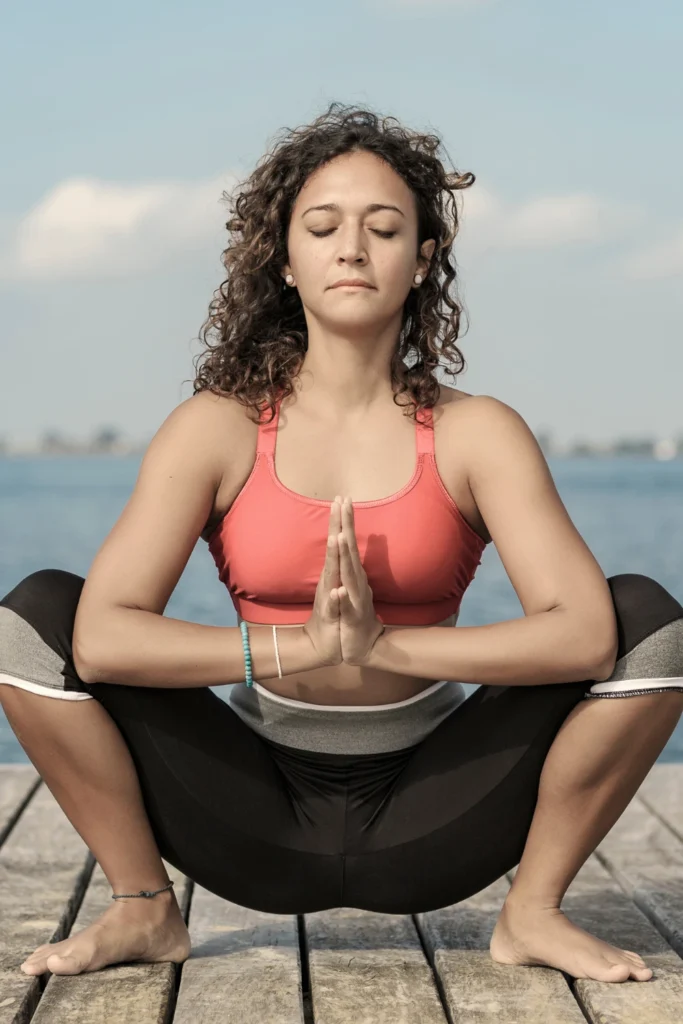
There’s a test called the Sitting-Rising Test, developed by Brazilian researcher Dr. Claudio Gil Araújo. You sit down on the floor and stand back up, ideally without using your hands, knees, or any support. You’re scored out of 10.
The deep squat is the movement that keeps you good at this test. It trains hip mobility, ankle mobility, knee strength, and core control all at once. It’s how toddlers naturally rest, and how many older adults in cultures where floor sitting is normal stay mobile into their 90s.
What happens if you don’t: you lose the ability to get up off the floor independently. This is the line between aging well and needing help.
How to fit it in: Sit in a deep squat for 30 to 60 seconds a day, holding onto something for balance at first if you need to. Build to bodyweight squats, then weighted (goblet squats, then back squats). The depth matters more than the weight at the start.
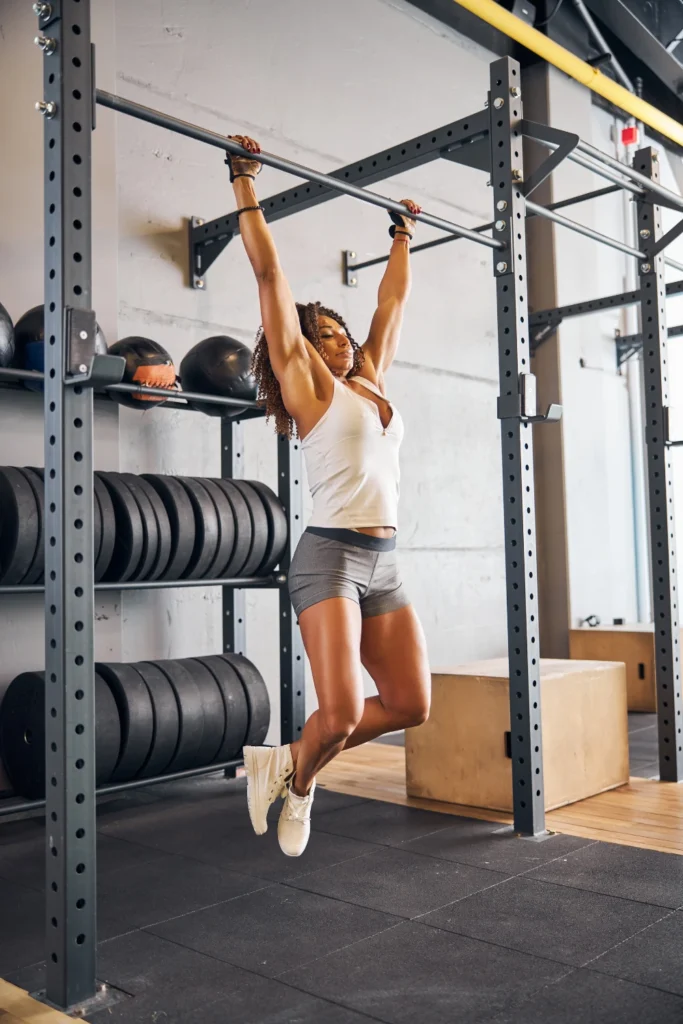
Grip strength is one of the strongest predictors of how long you’ll live, and almost nobody trains it directly.
The PURE study, published in The Lancet, followed more than 140,000 adults across 17 countries and found that grip strength predicted mortality more strongly than systolic blood pressure.
Now, grip strength is a proxy. It reflects whole-body muscle mass, neuromuscular function, and the resilience that lets you survive illness. A weak grip after 40 is your body waving a small flag.
What happens if you don’t: the obvious stuff (jars, grocery bags, holding on if you slip on stairs) and the bigger stuff (faster sarcopenia, worse cardiovascular markers, higher fall risk).
How to fit it in:

Tight hips are usually caused from sitting all day and they’re the difference between catching yourself and breaking a hip.
A study on hip strength and balance found that strong, mobile hips are the biggest predictor of whether you stay steady on your feet as you age. And 37 million adults over 65 fall every year, so this is the one I’d rather not be casual about.
What happens if you skip it: hip flexors shorten from sitting, glutes go quiet, your lower back picks up the slack, and balance slowly slips. Eventually that adds up to a fall, which, as we age, becomes a much bigger deal than it sounds.
How to fit it in: Three to five minutes a day, do some light hip mobility like The World’s Greatest Stretch, 90/90 hip switches, pigeon pose, a deep squat hold, glute bridges. Easy and it feels so good.
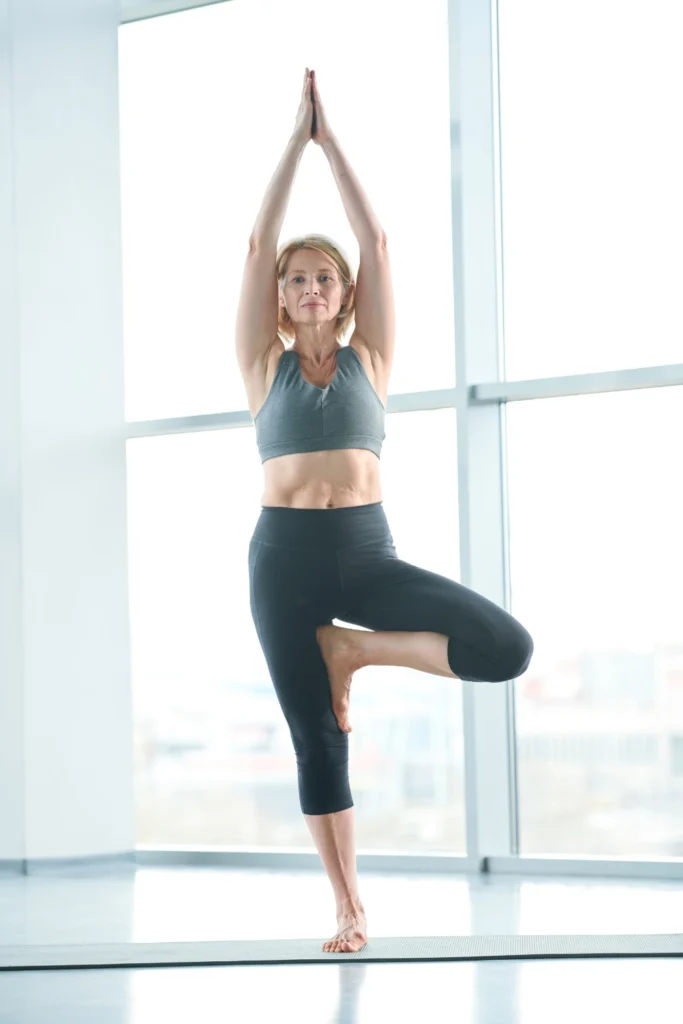
This is the one nobody trains because it doesn’t feel like a workout. It might be the most predictive of all of them.
A 2022 study in the British Journal of Sports Medicine found that adults 51 to 75 who couldn’t stand on one leg for 10 seconds had an 84 percent higher risk of dying in the next decade. Ack!
Balance really is a use it / lose it activity.
Skip it and you compensate without noticing. It means you grab the counter putting your pants on, hold the railing a beat longer, stop trusting yourself on uneven ground. Eventually one missed step becomes a real fall.
How to fit it in: Stand on one leg while you brush your teeth, switching sides halfway. Once that’s easy, close your eyes (near a counter, please). Bonus: swap in single-leg versions of moves you already do, like split squats or step-ups. You’ll feel which side is weaker right away, and that asymmetry is exactly what falls are made of.
You don’t need to do all seven this week.
Pick the one your body is most asking for and build from there. Most foundations-stage women I work with start with two strength sessions a week (covering the squat, deadlift, and carry), 7,000 steps a day, and three minutes of hip mobility before bed.
That’s the bare-bones starting point.
Build the foundation. Layer the rest in over several weeks and you’ll start reversing your age, naturally. This is exactly where The Glow Protocol starts: foundation first, every time.
The minimum effective dose is two to three strength sessions a week, around 150 minutes of Zone 2 cardio, 7,000+ steps a day, and a few minutes of mobility daily. That’s roughly 4 to 5 hours of intentional movement per week, plus walking.
You can reverse measurable markers of biological aging. The 2023 Aging Cell HIIT study showed a 3.59-year reversal in transcriptomic age in four weeks. Strength training improves bone density, which is the literal opposite of bone aging. Whether this adds years to your life is debated. Whether it adds capability and energy to the years you have is not.
A weighted hip hinge (kettlebell deadlift or trap bar deadlift). It builds bone density, posterior chain strength, grip strength, and the ability to pick things up without hurting yourself. If lifting isn’t accessible yet, walk briskly for 30 minutes a day. Start there.
Most of them, yes, with modifications. A trainer or physical therapist familiar with women 40+ is worth the money for the first month. Don’t push through pain. Instead, modify ranges, lower loads, and progress slowly. Mobility work and Zone 2 walking are almost always safe ways to start.
Energy and sleep changes in 1 to 2 weeks. Strength gains in 4 to 6 weeks. Visible body composition changes in 8 to 12 weeks. Bone density takes 6 to 12 months to register on a DEXA scan. Be patient. The foundation is being laid before you can see it.
You can’t out-supplement a body that isn’t being used. You also can’t out-treat it, out-skincare it, or out-Botox it.
The seven exercises above are the inputs the body responds to at any age. Walking, Zone 2, HIIT, the hinge, the squat, the carry, the mobility work. None of them are sexy, but all of them are the actual work.
Pick one, start this week, and build from there.
If you want the strength piece handled for you, three days a week, no decision fatigue, Fit Forever is the program I built around the squat, hinge, carry framework. Bundle it with 6-Week Shred using code GLOW15.

FOLLOW ALONG ON INSTAGRAM & PINTEREST


