Welcome to Here for Vanity - sharing all things self-care, anti-aging, and beauty for navigating the glow-up after 40.
Glad you're here!
Learn more
These meal prep essentials cover every tool, container, and supply you actually need to set up a kitchen that makes healthy eating easier all week long.

This post may contain affiliate links. This means I may earn a small commission if you purchase a product through my link at no extra cost to you. All items are carefully curated by me and reflect my honest opinion.
I’m sharing all the details below. For the entire shoppable list visit the healthy meal prep Amazon storefront here: Healthy Meal Prep Essentials.
Good meal prep containers are the first thing to buy.
They make it easier to portion meals, store leftovers, and grab food quickly during the week, rather than piecing something together when you are already hungry.
Glass is great for reheating and durability, while lightweight plastic can be easier if you are packing lunches often. I like these ones from Amazon.
Sheet pans make meal prep simple because you can cook a lot of food at once with very little effort.
Protein, vegetables, potatoes, and roasted snacks all go from raw to done on one pan, which means less hands-on time and fewer dishes. For most people, this is one of the nest meal prep tools to own.
Parchment paper isn’t exciting, but it makes a difference.
It keeps food from sticking, helps sheet pan meals cook more cleanly, and makes it much easier to batch cook without scrubbing pans afterward.
I prefer to get the unbleached kind (this brand is good), and you can also get them cut exactly the size of your sheet pans, too.
A good knife makes meal prep faster and safer.
Chopping vegetables, trimming protein, slicing fruit, and prepping ingredients all get easier when you are not fighting a dull blade. Toss the old, cheap knives, and get a good one.
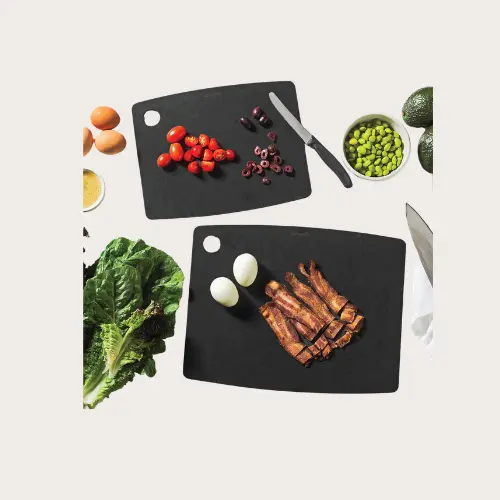
A larger board gives you room to prep without making a mess all over the counter, while smaller ones are great for convenience and easy clean up. I have a mix of both.
I’ve been loving my new ones from Epicurean – they’re lightweight, non-toxic, and can go in the dishwasher too.
Mixing bowls get used constantly during meal prep.
They are helpful for tossing vegetables with oil and seasoning, marinating proteins, mixing sauces, and collecting scraps while you cook. A set with a few sizes makes the whole process less messy.
A food scale helps with more consistent portions, especially for protein, rice, oats, and meal tracking (super important also if you’re tracking macros).
You might also like: How to Count Macros the Easy Way: Complete Beginner’s Guide
Pre-portioned snacks are just as important as prepped meals. Having small containers ready for nuts, cut fruit, or hummus and vegetables means you’re not standing in front of the fridge making bad decisions at 3pm.
Overnight oats, chia pudding, and grab-and-go snacks all work perfectly in mason jars. They seal well, stack easily, and can go straight from the fridge to your bag in the morning without thinking twice.
Read next: Easy Protein Overnight Oats You’ll Want to Make Every Week
Not every kitchen gadget earns a permanent spot, but these three do. Each one handles a specific part of the prep process, and together they make it possible to have a full week of food ready without standing over the stove the entire time.
My air fryer gets used constantly.
It is one of the fastest ways to cook protein and vegetables well without heating up the whole kitchen. Chicken thighs, salmon, broccoli, and sweet potatoes all do well here. It is also much better than the microwave for reheating leftovers.
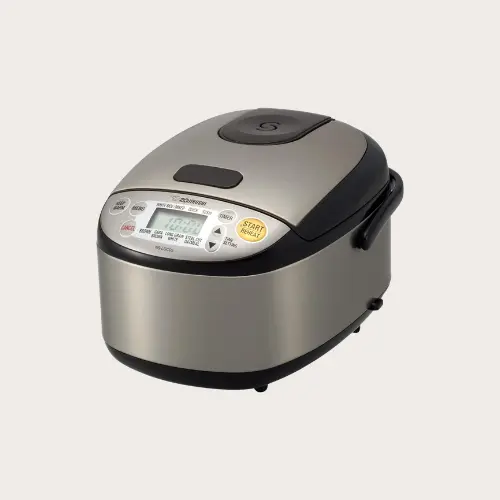
Set it, walk away, come back to perfectly cooked rice every time. While it runs you can focus on everything else without watching a pot. Most rice cookers also handle quinoa and oats, which makes it even more useful across a full prep session.
The most hands-off appliance in the kitchen. Add your ingredients in the morning, go about your day, and come back to a fully cooked meal. It’s especially good for proteins like chicken, pulled turkey, and pot roast that get better the longer they cook.
I still prefer a slow cooker over an Instant Pot. It is easier, and I am not interested in arguing with an appliance.
These meal prep tools are helpful, but they are not where I would spend first.
Start with containers, sheet pans, a knife, and a few basics. Then add these if meal prep is already part of your routine and you want to make it faster.
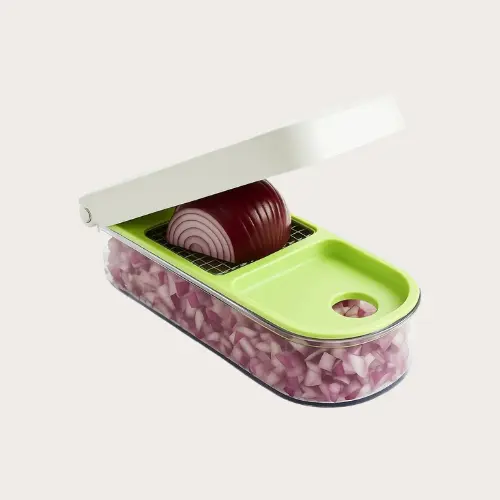
Chopping vegetables is usually the most time consuming part of the whole session. A veggie chopper cuts that time significantly and makes it much easier to stay consistent when prep feels fast and simple.
These actually work! Produce saver containers keep cut vegetables, leafy greens, and fruit fresh significantly longer than a regular container or bag. If your produce is consistently going bad before you can use it, this is the fix.
Faster than a knife for trimming chicken, cutting herbs, portioning meat, and snipping green onions straight into a bowl. Not essential, but once you start using them during prep you reach for them constantly.
Perfect for marinating proteins, freezing batch-cooked meals, and storing anything that doesn’t need a rigid container. Gallon bags are especially useful for prepping in bulk and freezing half for later in the week.
Meal prep is really about staying organized and disciplined throughout the week so you’re set up to make better choices before hunger and a busy schedule take over.
When food is already prepped and ready to go, you eliminate decision fatigue and the chances of grabbing something you didn’t plan for drop significantly.
Here are my top tips for making it work:
Wash, chop, and store everything as soon as it comes home from the store. When vegetables are already cut and sitting in a container, you’ll actually use them. When they’re whole and need washing and chopping at 6pm on a Wednesday, you won’t.
Season or marinate your proteins before they go in the fridge. By the time you’re ready to cook, the flavor is already built in. It takes two extra minutes on the front end and makes a noticeable difference in how good everything tastes by midweek.
This is the step most people skip and then wonder why they’re raiding the pantry at 3pm. Portioning snacks into small containers at the start of the week means healthy options are just as grab-and-go as anything else in the fridge.
Download the free 7-Day Glow Reset.
It gives you the baseline audit, the core foundation habits to fix first, and a simple 7-day reset for whole foods, protein, hydration, movement, sleep, and stress so healthy eating actually sticks.
Everything I mentioned in this post, in one place. These are the exact tools, containers, and supplies I use and recommend.
If you want to keep this simple, start with the basics first.You do not need to buy everything at once. Build your setup in the order you will use it.
Buy these first:
Worth it if you meal prep often:
Nice extras:
Most people do best prepping 4 to 5 days ahead. It’s enough to cover the bulk of the week without food sitting in the fridge too long. If you want to prep for a full week, it often works better to prep on Sunday and refresh one or two things midweek.
It depends on what you made. Cooked proteins like chicken, ground turkey, and salmon are good for 3 to 4 days. Grains and roasted vegetables hold up for 4 to 5 days. Cut vegetables, overnight oats, and portioned snacks can usually go the full week.
My rule: anything protein-based gets eaten by Wednesday or Thursday when I prep on Sunday. If something won’t get eaten in time, freeze it the day you make it.
Start with foods that cook well in bulk and reheat well.
Chicken thighs, ground turkey, hard-boiled eggs, salmon, rice, quinoa, potatoes, and roasted vegetables are all easy places to start. No-cook options like bagged salad, cucumbers, fruit, and hummus also make the week easier.
Keep your basics, but switch up the flavors!
The same chicken, rice, and broccoli tastes completely different as a Greek bowl versus an Asian bowl. Pick one or two flavor profiles at the start of the week and let that guide your sauces and toppings.
Keep a few easy add-ons on hand, things like hot honey, hummus, kimchi, avocado, and a good salsa. Rotating those in keeps meals interesting without turning meal prep into an all-day thing.
Meal prepping means portioning full meals into containers so they are ready to grab.
Ingredient prepping means cooking components separately and building meals throughout the week. Neither is automatically better. Full meals are more convenient, while ingredient prep gives you a little more flexibility.
If your budget is limited, buy the basics first.
Meal prep containers, sheet pans, parchment paper, a sharp knife, and mixing bowls will do more for your routine than a pile of trendy gadgets.
Start there, keep the setup simple, and build from experience. A better system usually beats more equipment.